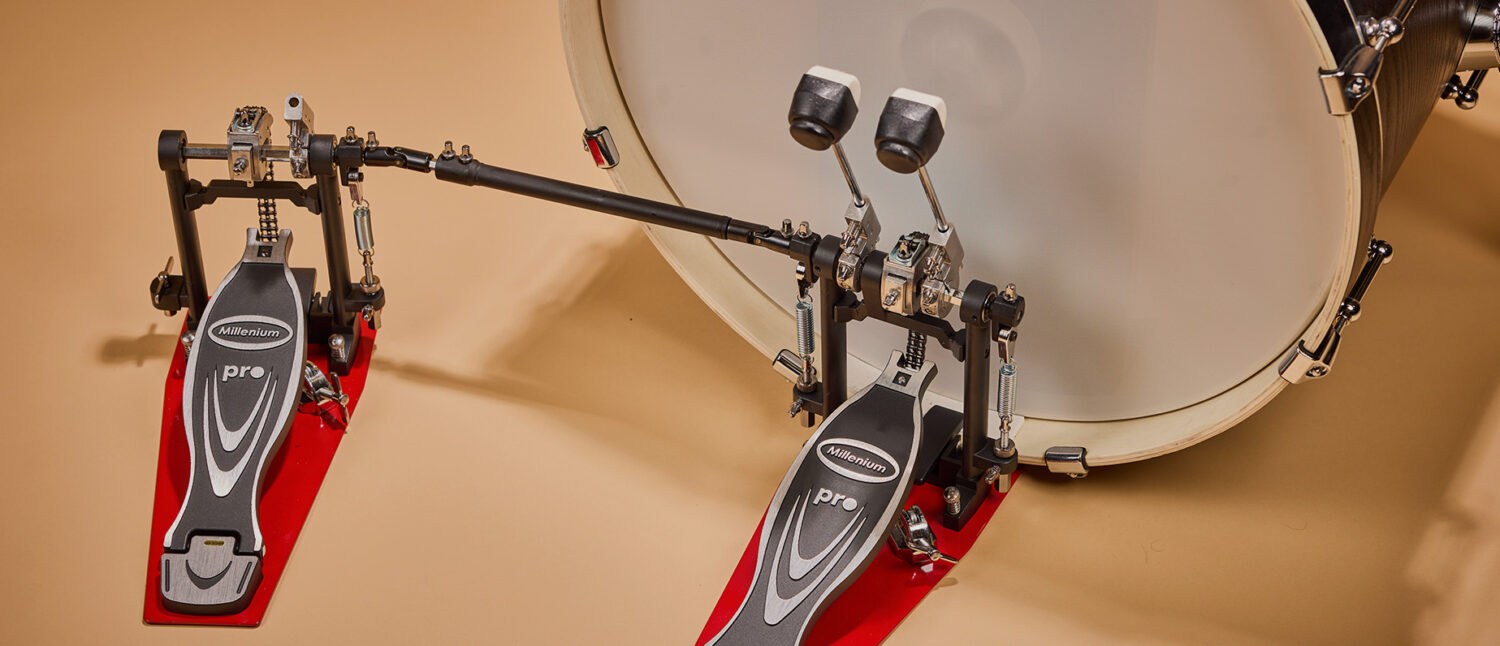
Stage, Pro Series, and The Strike – Our Double Pedals Compared
Why would you even need a double pedal?
Many drummers get by perfectly fine with a single bass drum pedal. Their playing style and band simply don’t require the speed or complexity of a double pedal setup. Maybe you’re in the same boat right now, but you’re still wondering: Should I invest in a double pedal? Let’s break down the arguments in favor.
The most obvious reason is speed. While social media might have shown you drummers extracting lightning-fast beats from a single pedal, there are physical limits. As tempo increases, so do the demands on volume, consistency, and power, all of which naturally decline at higher speeds. A double pedal helps you maintain control, precision, and speed, even in the most demanding passages. It’s no surprise that double pedals are a staple in genres like metal, extreme metal, rock, funk, and even pop, where top drummers rely on them to deliver explosive, intricate performances.
Why stability and smooth action matter in a double pedal
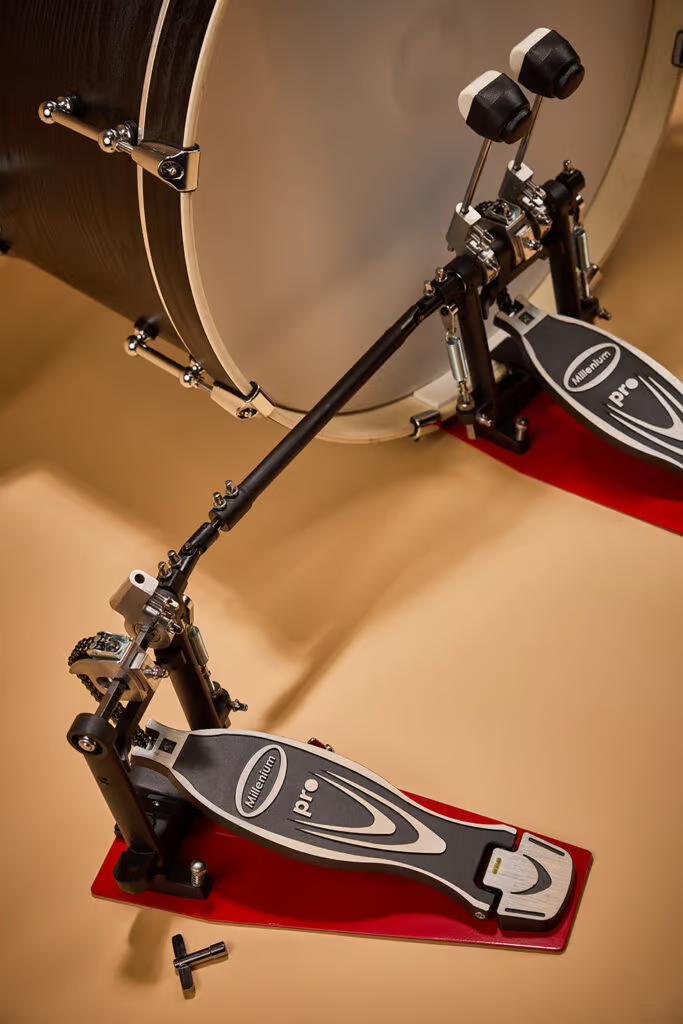
Even with a double pedal, you’ll likely use the primary pedal for most of your beats. So, the same criteria apply as with a single pedal: look for a sturdy base, smooth-running axles, and minimal play in the footboard. The construction should be rock-solid. Wobbly footboards, stiff axles, or squeaky springs force you to expend extra energy, which can be a minor annoyance during slow, isolated beats but a major problem when you’re aiming for blistering bass drum patterns.
Then there is the slave pedal. Its feel should match the primary pedal as closely as possible, and the connecting rod is the key to achieving this. A lightweight, low-play rod ensures seamless synchronization between both pedals.
The Millenium PD-669 Stage: The affordable entry-level double pedal
If you’re just starting out with double pedal playing, you’ll want a machine that’s budget-friendly yet packed with all the essential features to help you grow as a drummer. The PD-669 fits the bill. It comes with two rubberized base plates for a solid, slip-free stance, and it offers all the adjustments you need for optimal playability. This includes spring tension adjustment, which determines how much force you need to apply. Lighter settings make for easier beater movement toward the drumhead, while tighter springs ensure faster rebound. You can also adjust the beater angle and footboard angle on the PD-669. A steeper beater angle shortens the distance to the drumhead, while a more extended angle lets you build up more power.
Chain drive vs. direct drive – What’s the difference?
The Pro Series pedals offer something you’d typically only find in far higher end series: a choice of drive systems. The dual-chain drive of the PD-222 (and its left-footed version) delivers precise, slightly organic pedal action, while the direct aluminum links of the PD-223 provide maximum accuracy, ideal for drummers in metal and extreme metal. If you want to dive even deeper into customization, the PD-223 Direct Drive models also allow you to adjust the pedal’s response characteristics. Plus, all Millenium Pro double pedals let you independently adjust the beater angle and footboard angle for a tailored feel.
For the specialists: Longboard, Shortboard, and more options
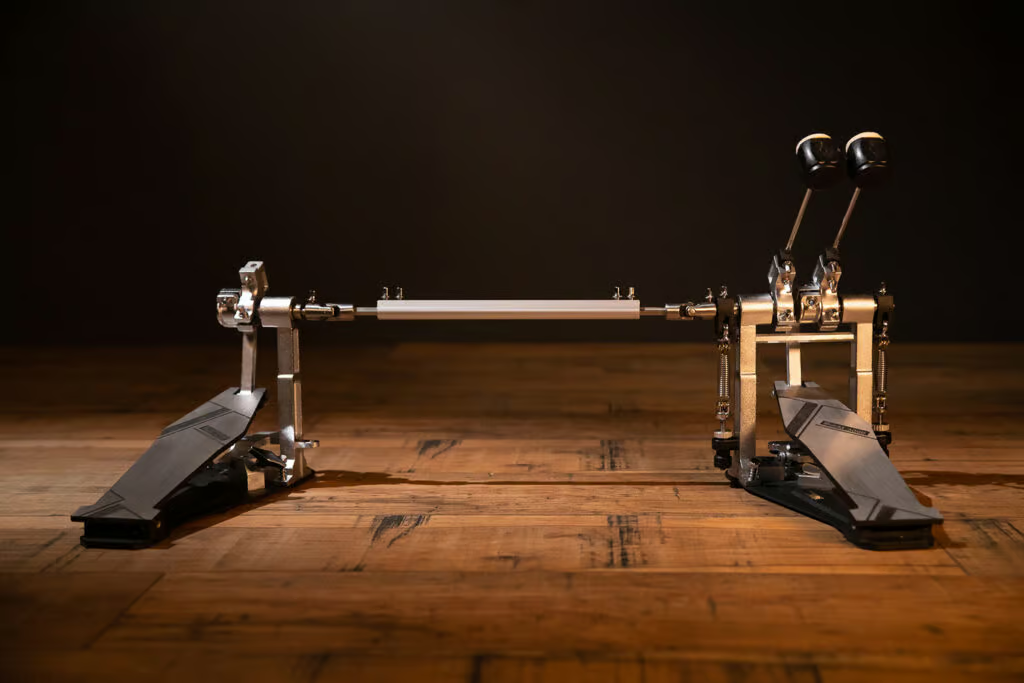
If you’re already familiar with bass drum pedals, you’ve probably heard of the high-end models from leading brands. These often feature machined aluminum components and an array of adjustment options. Inspired by this, the Millenium The Strike double pedal takes versatility to the next level. Not only can you switch between chain drive and direct drive, but you can also convert it from a longboard to a shortboard pedal. Longboard pedals omit the heel plate, unlocking additional playing techniques for those who want to explore new dimensions in their footwork.
So, which double pedal is right for you?
The answer is straightforward. If your goal is maximum speed and you want to fine-tune your pedal to match your playing style, opt for a double pedal with as many adjustment options as possible. For a more natural feel, go with a chain drive; for immediate, direct response, choose direct drive. If you’re happy with standard settings – which covers most drummers – a double pedal with a chain drive and solid construction will serve you well in almost any musical situation. For beginners or drummers looking for a secondary pedal for tours or rehearsal spaces, the PD-669 Stage is a fantastic choice.
No matter which model you pick, remember: your sound and your speed are ultimately in your hands!