Drum Set Ergonomics – Tips for Comfort and Control
Playing the drums is a deeply physical activity that involves your entire body. Even if it’s only a casual hobby and doesn’t demand athletic heroics (for some drummers it certainly does), it’s important to set up your kit sensibly and watch your posture. Being relaxed while playing will not only make you feel better – it will also make you sound better. In this article, we’ll take a look at some of the basics every drummer should keep in mind.
Ergonomic Kit Setup
Good ergonomics starts with a sensible kit setup. There are no strict rules – what matters most is that your setup feels natural to you. Still, a few basic concepts apply to every drummer. One of them is keeping the kit as compact as possible. Avoiding unnecessary gaps between the kit pieces will make it easier to move around the kit freely and will improve the overall flow of your playing. Of course, you should still make sure that drums and cymbals don’t end up touching each other.
The height and angle of your drums are also important to consider. Ideally, you want to strike the drumhead at a fairly flat angle so the stick can rebound naturally – but not so flat that you risk hitting the rim by accident. So lower drums can stay almost level, while higher drums need more tilt. When experimenting with different setups, make sure your arms and shoulders can stay as relaxed as possible. A sensible kit setup helps your movements flow more smoothly, improves control, and eases strain on your whole body in the long run.
Sitting Comfortably: Height, Posture and Distance to the Kit
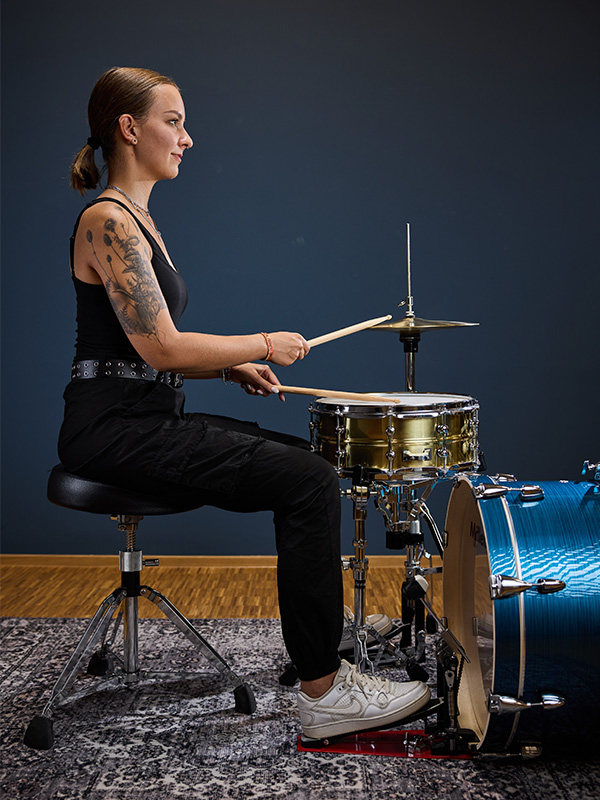
Once your kit is set up comfortably, it’s worth taking a close look at your seating posture. Your hips should be slightly higher than your knees, with your thighs angled gently downward. This reduces strain on your lower back and lets your feet move freely on the pedals. How you position yourself on the stool matters, too. Many drummers prefer sitting slightly toward the front of the seat, with their weight gently balanced forward. The key is to stay upright, with your pelvis resting on your sit bones rather than collapsing into a slouched position.
Your distance from the kit is just as important. You should be seated so that drums and cymbals feel naturally within reach, allowing you to hit near the center of the snare and tom heads. Sitting too close often forces your elbows back and creates tension in your back and shoulders, while sitting too far away can make your arms and shoulders tense as you reach for the cymbals. Good posture isn’t just about comfort – it often shows up in the way you play, and in how solid your groove feels.
Stick Grip and Playing Technique
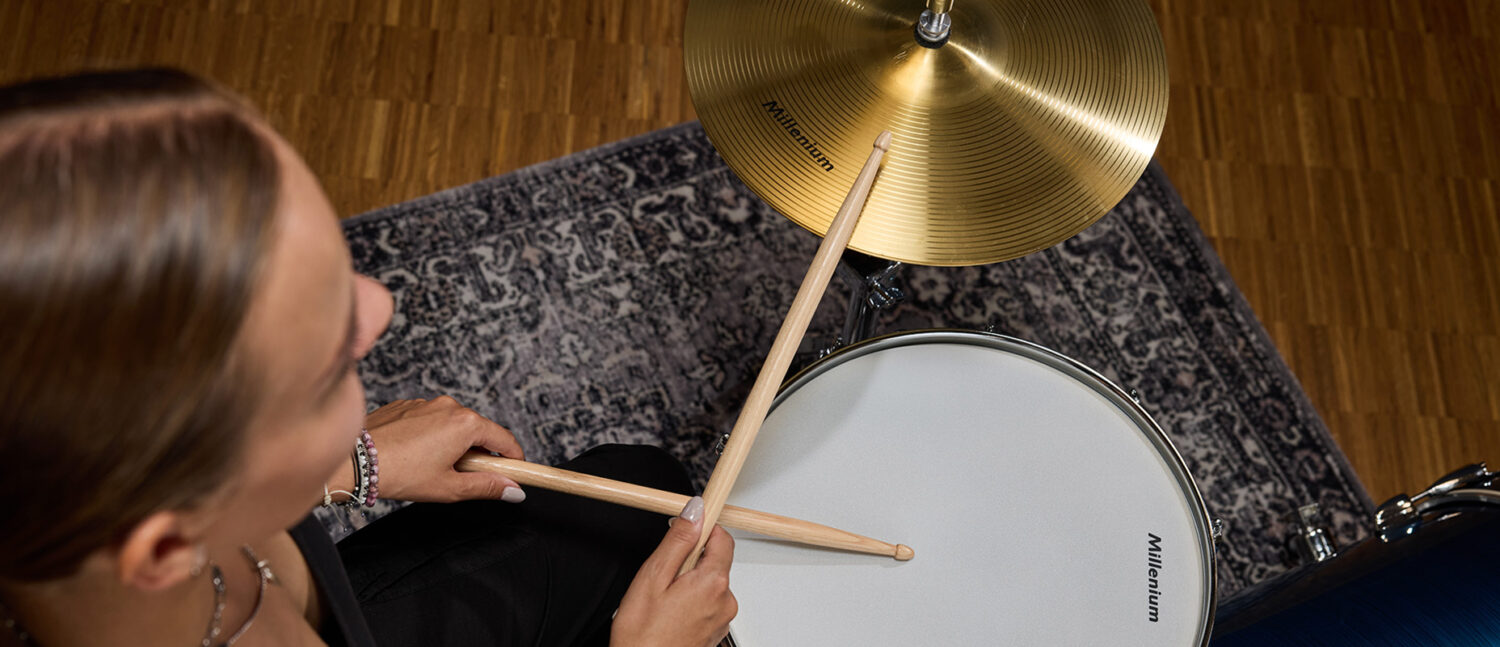
Another fundamental factor is your stick grip. In matched grip, the stick rests lightly between your thumb and index finger. The other fingers support the stick without squeezing it. Don’t push the stick into the drum – let it bounce naturally and follow its momentum. This way, you stay in control and keep your wrists, arms and shoulders relaxed.
Here’s a very simple tip for your daily practice: start each session with a few minutes of relaxed strokes around the kit, focusing on staying as loose as possible — without unnecessary big movements or forcing the stick with extra strength. This can quickly improve your overall technique and, over time, also build speed and endurance.
Staying Aware of your Posture
All the tips and advice only work if you’re truly aware of your posture. Bad habits or tension often go unnoticed. That’s why it can be helpful to practice in front of a mirror or occasionally film yourself with your smartphone. Of course, the best option is to work with an experienced teacher who can spot problems and guide you toward a more relaxed, efficient technique. With a little awareness and regular practice, you’ll find that your playing becomes smoother, more controlled, and ultimately more enjoyable – all without a sore back or clamped-up forearms.