Debunking three drumming myths
In this Millenium Magazine feature, we tackle some of the most persistent myths about drumming. A myth is often a supposed fact that, upon closer inspection, turns out to be false. Myths exist everywhere, and drumming is no exception. If you’re a beginner or thinking about starting to play the drums, some of these “legends” can be downright bad for you development. That’s why today, we’re thoroughly debunking the three most dangerous ones. Let’s dive in!
Myth 1: Great drummers started as kids
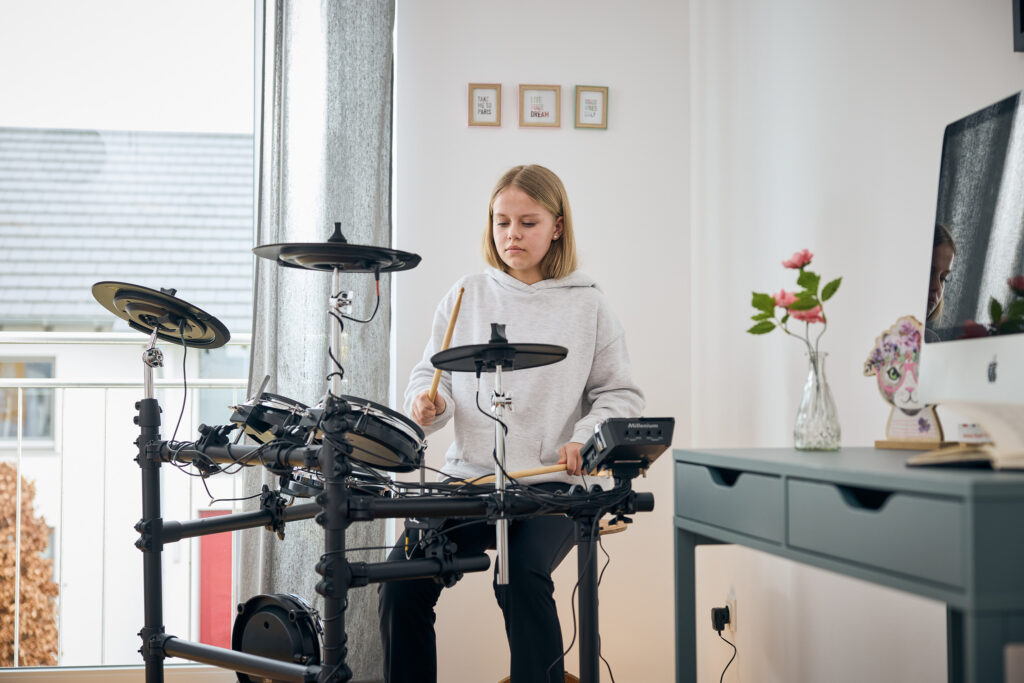
This classic myth isn’t just stubborn – it’s also not unique to drummers; it plagues all instrumentalists. But here’s the truth: it’s complete nonsense. Extensive studies have shown that the age at which you start playing isn’t what determines your technical or musical success. What does matter is the intensity of your practice, the quality of your training, and – above all – your motivation. Your personal goals play a huge role, too.
If you’re 18 and dream of becoming the world’s best drummer at age 20, you might not reach that specific goal. But building a successful band, having a blast behind the kit, and developing serious technical potential for the future? Absolutely within reach. And if you’re 80 years old and considering picking up the sticks? Go for it! Drumming is about fun, passion, movement, and playing the best instrument in the world.
Myth 2: Drummers don’t need to read sheet music
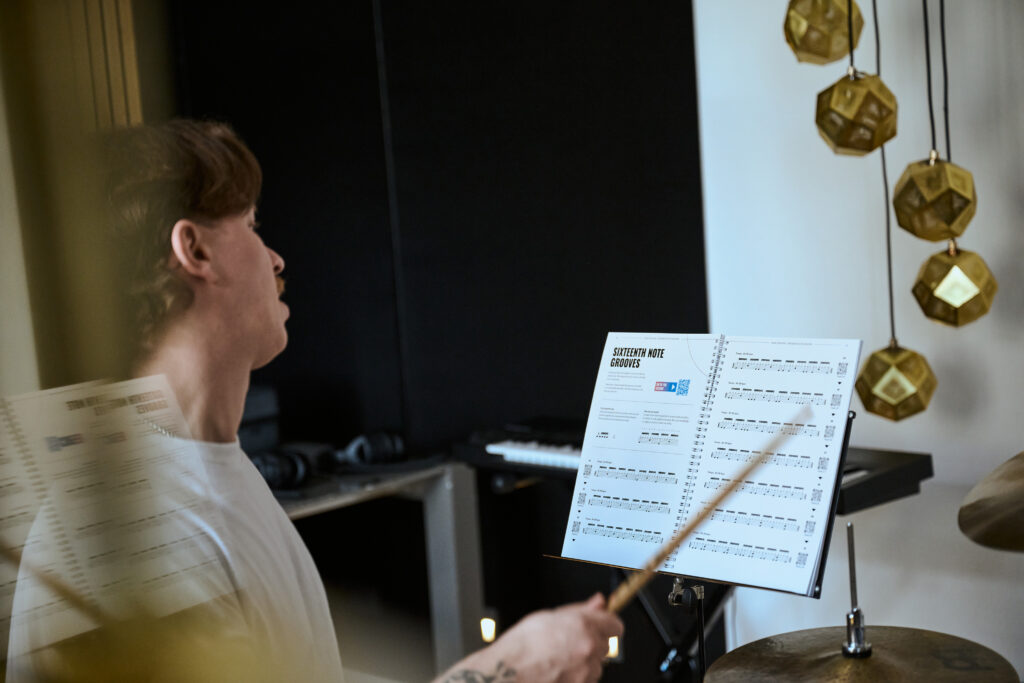
It’s true – some legendary drummers, like Dennis Chambers, have openly admitted they can’t read music. And with today’s tools, like videos and play-alongs, it’s easier than ever to learn drumming without sheet music. This makes the myth partially true. But as with the first myth, it depends on your goals and the context in which you play.
Most drum teachers use sheet music in their lessons, and for good reason: it’s the easiest way to notate music theory, rudiments, and grooves so you can take them home and practice. Later on, the ability to read music expands your job opportunities. In orchestras, big bands, and many studio sessions, reading sheet music is a requirement just to get in the door. Even in bands, sheet music can drastically simplify communication between musicians. And as a self-taught drummer, you’ll find that a basic understanding of note values leads to more interesting grooves and fills.
Bottom line: You don’t need sheet music to be a drummer, but it does open up a world of possibilities behind the kit.
Myth 3: Good technique is only for speed
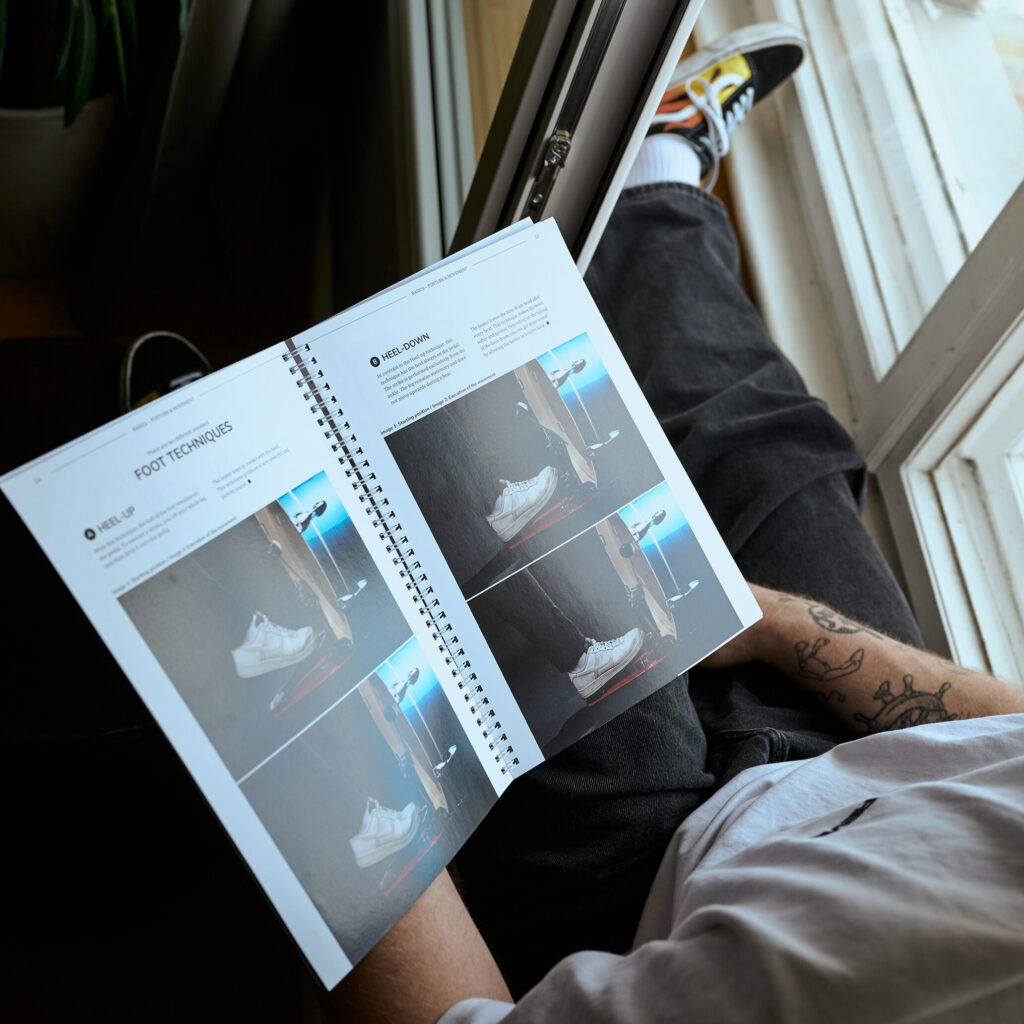
Blazing-fast double bass drums, intricate snare figures, mind-bending fills, and hand-foot combinations that look complicated even in slow motion – it’s enough to make any drummer feel inadequate. The internet is full of prodigies who seem to defy the laws of physics. Many drummers respond by saying, “I don’t want to play that fast anyway, so I don’t need technique.” But that’s falling for a dangerous drumming myth: technique is only for those who want to play fast.
Nothing could be further from the truth. Speed is just a byproduct of good technique. Technique isn’t just about playing fast, it’s about expanding your musical expression. For example, studying rudiments teaches you to play with minimal effort, which leads to more relaxed movements and greater efficiency. Ever notice how your favorite drummers look effortlessly cool behind the kit? That’s the power of good technique.
Think of it like a high-performance engine: at 120 km/h, it purrs smoothly, while a low-performance engine struggles to keep up. Good drumming technique also helps prevent injuries and tension. So, learning proper technique isn’t just about speed, it’s about playing better, smarter, and healthier.