Drums through the Decades: A Brief History of the Drum Kit
Alongside the human voice, drums are among the oldest and most primal instruments. The first drum solo probably happened when a caveman rhythmically struck a hollow tree trunk with his club to impress a cavewoman. And while the motives might seem strangely familiar in rock drumming, a lot has changed since then. In this article, we’ll take a brief look at how the modern drum kit came to be.
Military Roots and Marching Bands
One of the foundations of the modern drum kit was the military. Drummers kept soldiers in step, upheld discipline, and sent signals across the battlefield. In the American Civil War, this was done mainly on bass drum, snare drum, and cymbals – instruments that later became the backbone of the drum kit. After the end of the war, the marching band tradition – particularly famous in New Orleans – adopted many elements from military percussion. At this point, however, each instrument was still played by a separate musician.
Double Drumming and Trap Kits
Playing several instruments at once became common for drummers in stage shows and theater performances by the late 19th century. Indoor venues required saving both space and money, which led to “double drumming”, where one drummer played the bass drum and snare drum simultaneously – usually with sticks and without a pedal. Early pedal designs did exist, but they were difficult to control.
Over time, players began adding instruments from around the world to build the so-called “trap kit” (short for “contraption kit”). Chinese tom-toms, different cymbals, woodblocks, cowbells, and even classical percussion found their way in. First in theaters and later in silent films, drummers created adventurous and sometimes quirky setups. Some were used purely for sound effects while others added rhythm and color to musical performances, such as in early 20th century ragtime.
Early Jazz and the Swing Era
A turning point came in 1909 with the invention of the bass drum pedal. Unlike earlier designs, this one was easy to control and completely changed the way drummers played. In the 1920s, the drum kit further took shape in jazz clubs and speakeasies during Prohibition. Alongside the development of ride cymbals and hi-hats, the drummer’s role changed significantly. Players like Chick Webb, Gene Krupa and Buddy Rich were now driving the band and adding excitement with drum solos and showmanship, becoming much more than just a timekeeper.
Rock and Roll Explosion
With the rise of rock ’n’ roll in the 1950s and 60s, the drum kit finally took center stage. The music got louder, the kits grew bigger, often featuring a variety of toms and cymbals. Drummers like John Bonham of Led Zeppelin and Keith Moon of The Who redefined what it meant to play the drums. Their energetic performances, inventive grooves, and dynamic fills put the drum kit at the heart of the band.
The Modern Drum Kit
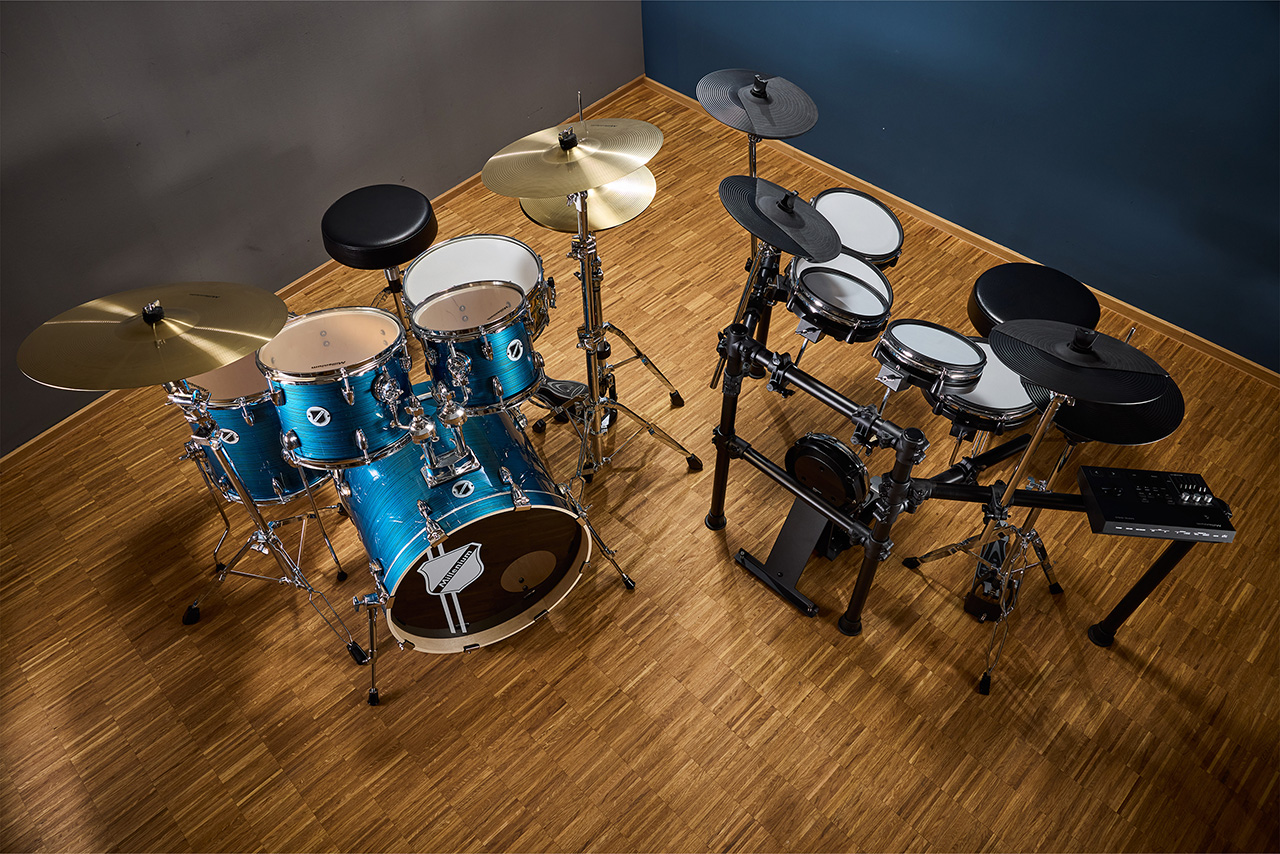
Today, drum kits come in all shapes, sizes, and configurations – from small jazz sets to massive rock and metal kits. Electronic drums and hybrid kits have opened up even more possibilities, pushing creative boundaries. From the first caveman with his club to the modern drum kit, the instrument has continuously evolved while remaining a reflection of its time and culture.