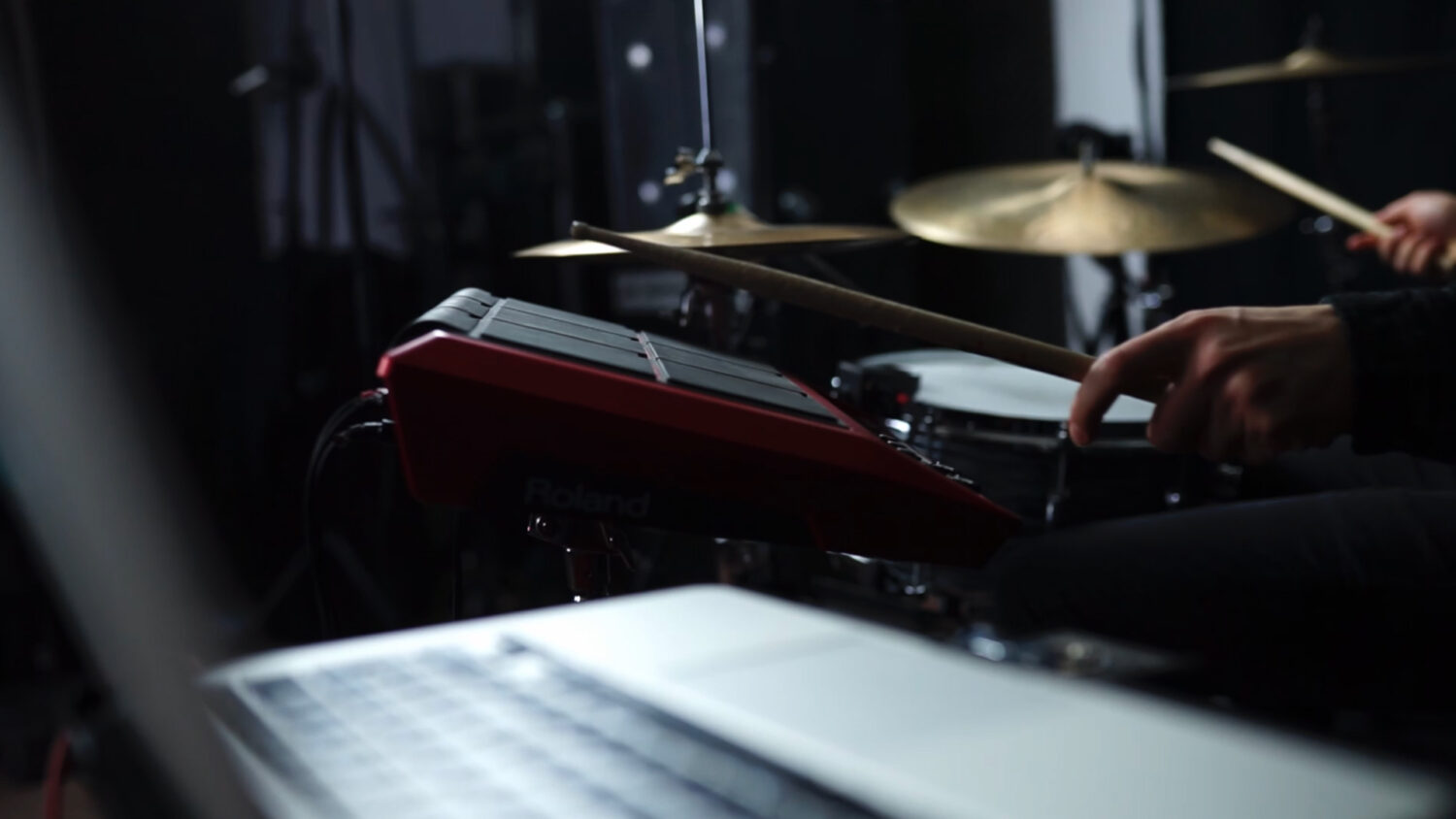
Hybrid Drumming - What is it?
The term “hybrid” refers to the combination of acoustic and electronic drums. If you’ve been playing the drums for a while, you’ve likely come across the terms “hybrid drums” or “hybrid drumming.” But what do they actually mean? At its core, “hybrid” describes a blend of two components. In this case, it’s the fusion of acoustic drums with electronic elements. Note: The term “hybrid” can also refer to purely acoustic drums, such as those made from a combination of materials like maple and mahogany.
What does a hybrid drum kit consist of?
A hybrid drum set – comprising both electronic and acoustic elements – can take countless forms. However, a typical setup starts with an acoustic base kit (bass drum, snare, hi-hats, and toms) enhanced with electronic drum pads and cymbal pads. These pads don’t produce sound on their own, instead, the audio comes from a drum module or control unit, which is typically mounted within easy reach of the kit.
Some hybrid setups feature all-electronic cymbals paired with fully acoustic drums, or vice versa. Another variation incorporates triggers – small sensors attached to the rims of acoustic drums. When struck, these triggers send a signal to the control unit, which then produces a sound. Triggers are often compact and discreetly mounted.

What are the benefits of hybrid drumming?
This question can be answered from two perspectives. From the standpoint of a purely acoustic kit, you gain infinite dynamic range and nuance, but you’re limited to the physical instruments at hand. By adding pads and a control unit, you unlock access to a theoretically endless library of external sounds, expanding your creative possibilities. Conversely, if you’re working with a purely electronic kit, integrating acoustic elements can restore the organic feel you might be missing. The expressiveness of a real ride cymbal or the subtle textures of a snare played with brushes are still difficult to replicate with pads alone. A hybrid kit, therefore, gives you the best of both worlds in a single setup.
How does a hybrid drum kit work live, in rehearsals, and in the studio?
Acoustic drums are loud, while electronic kits are nearly silent. A hybrid kit must balance both. To ensure you, your bandmates, or the audience can hear the electronic elements, amplification is essential. Live, your control unit’s output – along with the acoustic drum mics – would typically be routed through a PA system. In rehearsal spaces or during practice, headphones (for you or the whole band) are a practical solution.
What are the drawbacks of a hybrid drum kit?
While hybrid drumming offers many advantages, it also comes with trade-offs. The spontaneity of grabbing sticks and playing is somewhat diminished, as you’ll need additional equipment – headphones, amplifiers, or even a full PA system – to achieve a well-balanced mix of acoustic and electronic sounds.

Who are hybrid drum kits for?
Take a look at the stages of modern music productions, and you’ll notice that most acoustic drum kits are now supplemented with pads or triggers. This allows drummers to replicate the exact sounds heard on recordings during live performances. In high-end productions, the electronic elements might even sync with lighting or pyrotechnics. Hybrid drum kits are ideal for drummers who want to trigger a wide range of additional sounds live without switching to a full electronic kit. They’re also a great fit for rehearsal spaces and studios, where cymbal pads can reduce bleed into drum or instrument mics, resulting in a cleaner sound. If you’re seeking a creative boost but aren’t ready to switch to an e-kit, hybrid drumming offers a fantastic alternative.
For absolute beginners, however, hybrid setups may not be the best starting point. The added complexity is better tackled after mastering the fundamentals. Once you’ve got those down, expanding into hybrid drumming is a natural next step!