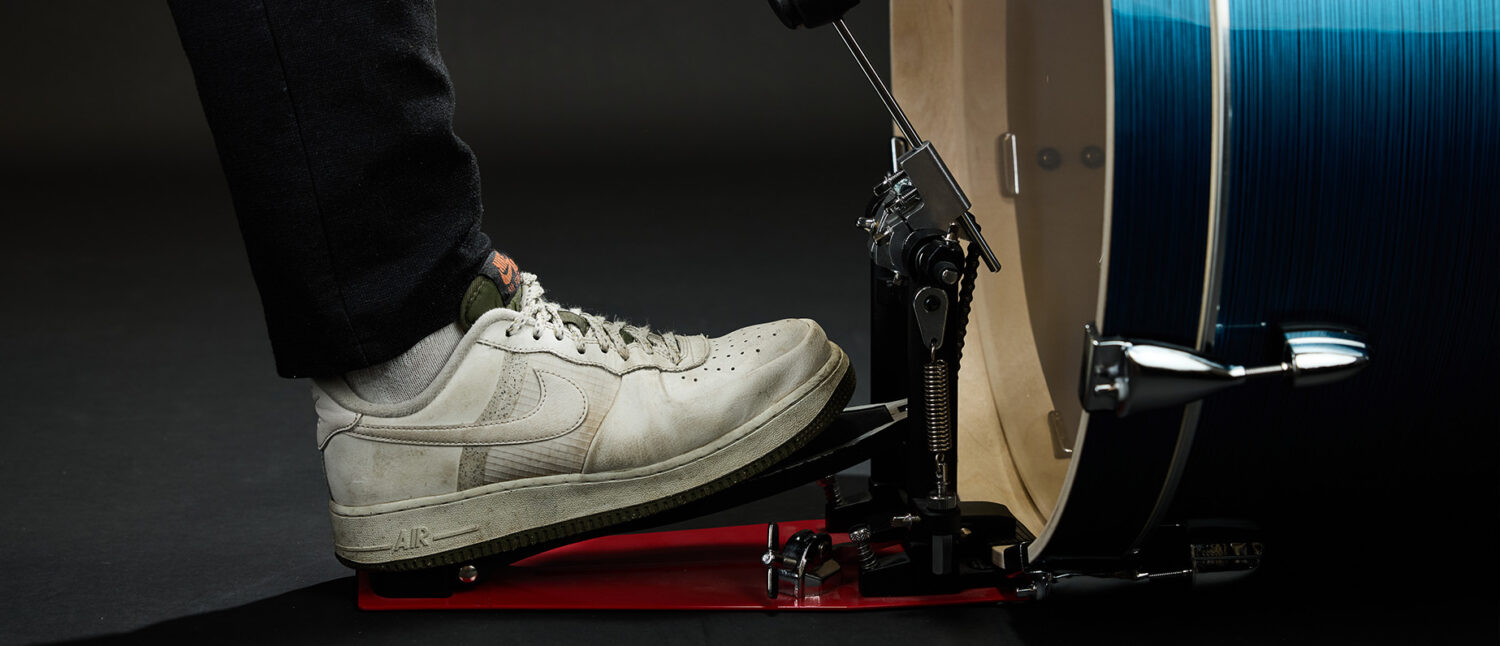
Playing the Bass Drum: Heel Up or Heel Down?
What does Heel Down mean?
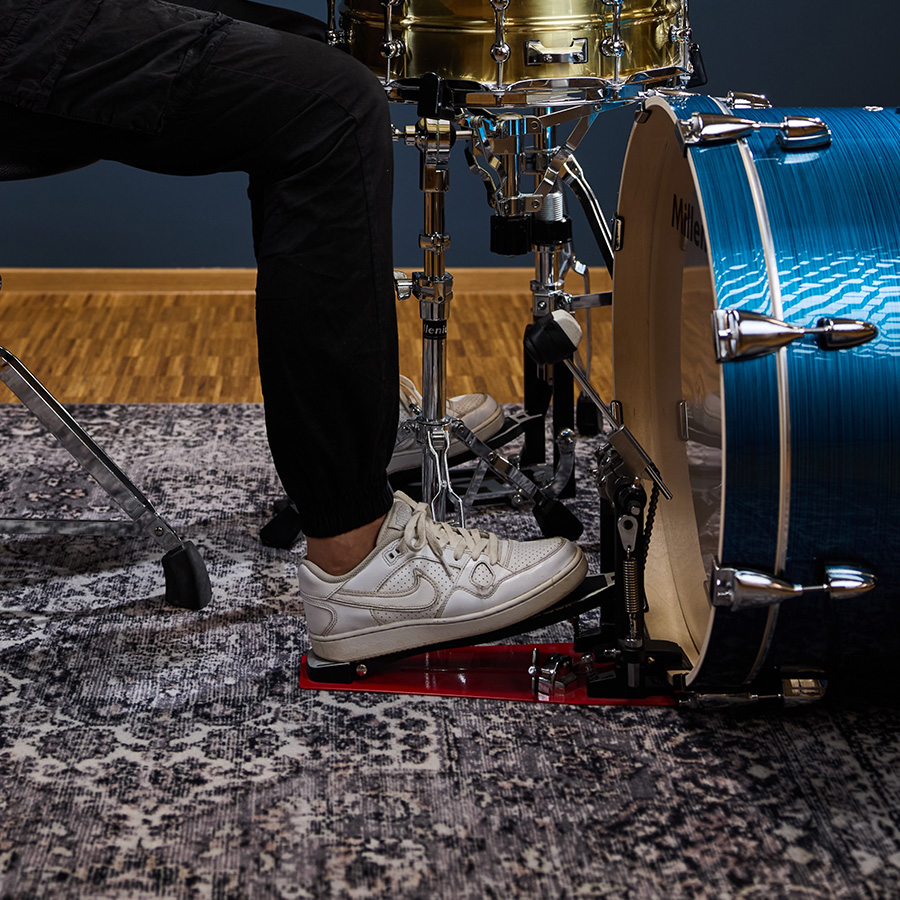
Heel down means that your whole foot stays flat on the bassdrum pedal as you play. With a standard pedal, your heel doesn’t lift off, all the power for the stroke comes from your ankle. If you’re just starting out on the drums, you’ll probably play this way naturally. It feels stable, especially when you’re also working the hi-hat with your other foot and sitting on the drum throne. Surprisingly, heel down isn’t the most common technique. Most drummers eventually switch to heel up, where the heel lifts off the pedal. But why are there two techniques, and what’s the difference?
Heel Down: Great for Jazz and quieter playing
You’ll often see the heel down technique used by drummers who play the bass drum softly or with lots of dynamics. That’s because using just your ankle gives you really precise control over how hard you hit. There’s another big plus: sound. Since the energy comes only from your foot, the beater bounces right off the drumhead after the hit, letting the bass drum batter head resonate freely. This makes the sound longer and fuller, perfect for jazz, where the bass drum is often tuned higher and the drumhead has a strong rebound.
What’s Heel Up all about?
With heel up, your foot isn’t flat on the pedal. Instead, only the top third of your foot makes contact, and your heel hovers a few centimeters above the pedal’s footboard. It might not look like a huge change, but it makes a big difference in how you play. Your balance shifts to the ball of your foot, and you’ll use your whole leg – knee and all – to power the stroke. Watch a drummer playing heel up, and you’ll see their knee rise and fall with each hit. This technique packs a lot of power, which means you can play much louder if you need to.
Heel up: The go-to for powerful bassdrumsounds in Rock, Pop, Funk, and Metal

Heel up is now the standard for almost any style where the bass drum needs to hit hard and consistently—think rock, pop, metal, funk, hip-hop, and lots of electronic music. Using your whole leg gives you way more power, especially if you’re still building strength. Plus, the beater stays on the drumhead after the hit, either briefly or constantly, which cuts off the resonance and gives you a shorter, punchier sound.
Which bassdrum technique is best?
There’s no “better” or “worse” – it all depends on the sound you want, how it feels to you, and the music you’re playing. Serious drummers will tell you to get comfortable with both techniques. If you’re looking to up your bass drum game, checking out instructional videos from pros like Jojo Mayer or Steve Smith can be a huge help.
Where should beginners start?
Again, there’s no one correct answer. If you’re working with a good teacher, they’ll likely start by seeing which technique comes naturally to you and how well you can control it. If it’s working, you’ll probably stick with it and refine it over time. If you’re more advanced and have specific goals, think about which technique will help you get there. For example, if you’ve been playing heel up for years but want to dive into jazz or start playing in a singer-songwriter duo, learning heel down could be a gamechanger. The opposite is true, too – if you’re after more power and heel down isn’t cutting it, it might be time to add heel up to your toolkit.